How Fake Invoices Slip Past Busy Finance Teams


Ask any accounts payable manager what keeps them up at night and you will probably hear about month-end close, missing approvals, and that one vendor who sends invoices as blurry phone photos. Fake invoices may not be the first answer, which is exactly why they work.
I have spent roughly a decade around AP, claims, and expense fraud, and here is my slightly unpopular view: fake invoices do not usually beat finance teams because fraudsters are brilliant masterminds in hoodies. They beat finance teams because the process is designed to move legitimate work along quickly, and fraud hides inside that speed.
My hot take: fake invoices succeed by looking boring.
They arrive in the right inbox. They use a familiar supplier name. They reference a real project, claim, job, or cost center. They sit just under an approval threshold. They do not announce themselves with a neon sign saying please investigate me, although I admit that would make everyone’s life easier.
The stakes are not theoretical. The Association for Financial Professionals has reported widespread targeting of organizations through payments fraud, and the FBI’s 2023 IC3 report recorded more than $2.9 billion in business email compromise losses. Meanwhile, the ACFE Report to the Nations has long estimated that organizations lose about 5% of revenue to fraud. You do not need a Hollywood heist when a convincing PDF and a tired approver will do.
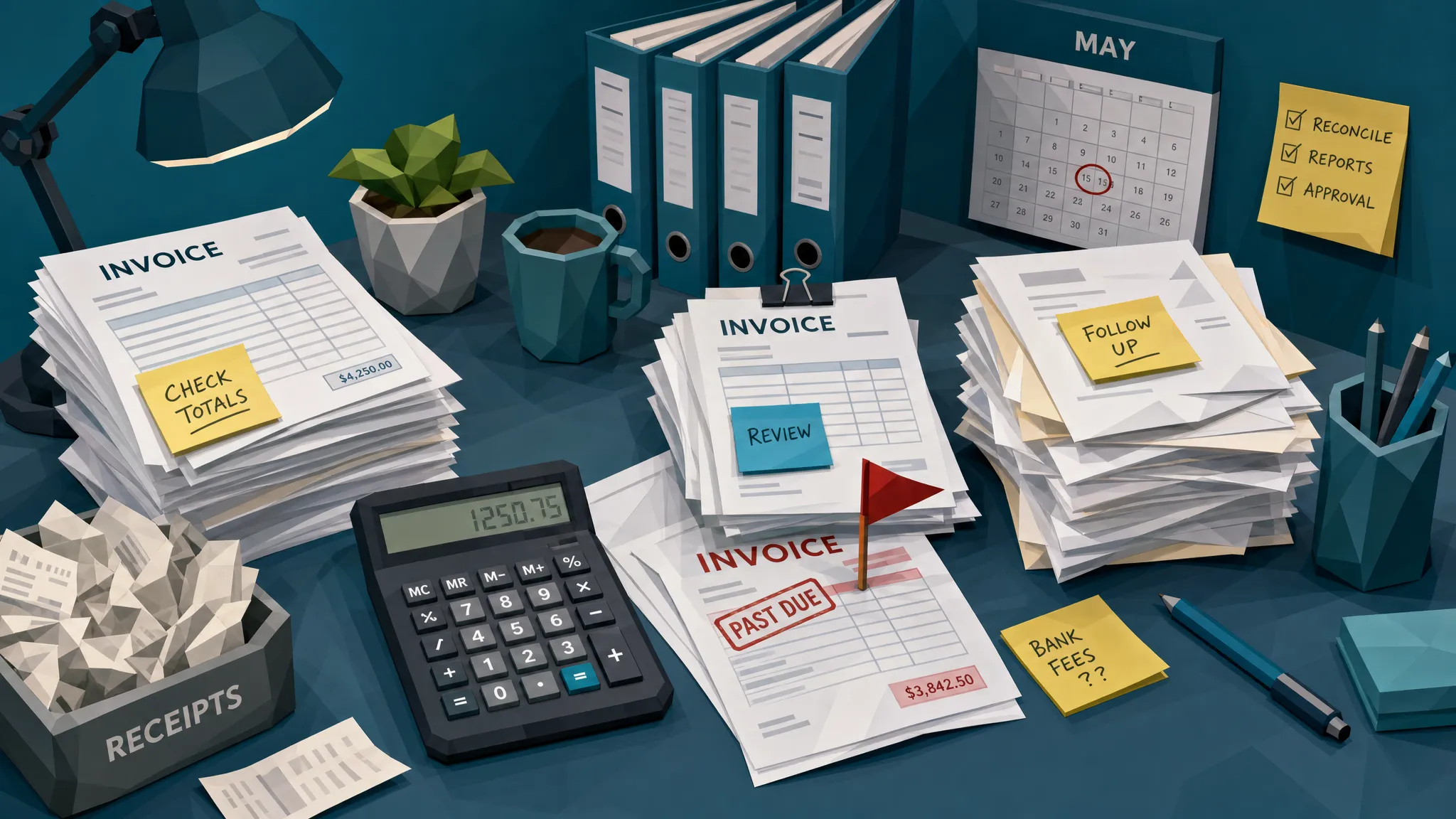
The invoice that slips through usually behaves like a normal invoice
The fake invoices that cause damage are rarely outrageous. They do not bill $90,000 for a box of pens. They bill $4,850 for facilities work, consulting hours, medical equipment, emergency repairs, contractor materials, or claim-related services. In other words, they bill for the kind of things finance teams already expect to see.
One case I remember involved a facilities invoice that looked almost painfully ordinary. The vendor was real. The purchase order existed. The amount was within the range of prior jobs. The approver recognized the site address. The only manipulated part was the remittance section, which had been swapped cleanly enough that a human reviewer would need a very suspicious personality and a strong coffee to notice.
That is the trick. A fake invoice does not need to be perfect. It only needs to be plausible at 4:58 p.m. when the payment run is waiting.
Busy teams trust data, but fraud often lives in the document
Most finance workflows are built around fields: vendor name, invoice number, date, total, tax, PO, GL code, approver, bank details. Those fields matter. But once an OCR tool extracts them and the ERP accepts them, the original document often becomes background decoration.
Fraudsters know this. They edit the total, paste over bank details, reuse an old invoice with a new date, or generate a synthetic invoice that looks cleaner than the real thing. The data can pass while the document is quietly screaming.
I once saw a receipt where the only obvious issue was a tiny math wobble. The subtotal, tax, and total were off by a few cents. Not enough for a casual reviewer to care. But paired with inconsistent text sharpness around the total and a file history that did not fit the submission timeline, it became much more interesting. Fraud investigations often start with boring little threads. Pull one, and the sweater complains.
Approvals create a halo effect
Approvals are necessary, but they can create false comfort. If a department head approves an invoice, AP often assumes the business owner checked it. The business owner assumes AP checked the document. Procurement assumes the vendor master process handled the risk. Everyone did part of the job, but nobody owned the authenticity question.
That is how fake invoices slip through. The approver is usually confirming that the work sounds familiar, not that the PDF has not been edited. A claims adjuster may confirm that a repair invoice fits the claim narrative, not that the receipt was generated yesterday from a template. An expense manager may check policy limits, not whether the hotel folio has been manipulated.
This is not laziness. It is role design. People review what they are trained and incentivized to review.
Three-way matching helps, but it is not a lie detector
Three-way matching is still useful. Matching the invoice to the PO and goods receipt catches plenty of errors and some fraud. I would never tell a finance team to throw it out. That would be like removing the locks because someone invented lockpicks.
But three-way matching has blind spots. Many organizations have legitimate non-PO spend. Construction, field services, multi-site operators, insurance claims, warranty work, healthcare reimbursements, and fast-growing companies often deal with messy invoice flows. Even when a PO exists, a manipulated invoice can reference real purchase data.
The match asks: does this invoice fit our records?
Fraud detection also needs to ask: does this document show signs of being altered, reused, synthetic, or inconsistent with the payment story?
That second question is where many finance teams are under-equipped.
Fake invoices love high-volume moments
Fraudsters are practical. They do not always need to defeat your best process. They wait for your worst Tuesday.
Month-end close, acquisitions, ERP migrations, holidays, new vendor onboarding, staff turnover, and emergency claim spikes all create gaps. I have seen near-duplicate invoices resubmitted during system transitions because teams were reconciling backlogs and trying to be helpful. Nobody woke up that morning intending to pay the same supplier twice. They were simply buried.
The busier the team, the more the process leans on assumptions. Known vendor. Normal amount. Approved by someone senior. No obvious math error. Pay it.
Fake invoices are built to survive that exact mental checklist.
The clues are usually clustered, not obvious
When I train reviewers, I tell them not to hunt for one magical red flag. Real fraud is often a cluster of small oddities. One oddity may be innocent. Four oddities deserve attention.
Here are the patterns I would rather see finance teams escalate earlier:
- Remittance details that look sharper, blurrier, or differently aligned than the rest of the invoice.
- Invoice numbers that do not match the supplier’s usual format or sequence.
- Metadata that suggests editing software, unusual creation dates, or a file history that conflicts with the claimed timeline.
- Totals, taxes, discounts, or line items that reconcile almost correctly, but not quite.
- Reused layouts, repeated images, or near-duplicate invoices submitted with small changes.
- Payment details that changed recently, especially when paired with urgency or a new communication channel.
That last one matters. A perfect-looking invoice becomes much less perfect when the bank account is new, the vendor has never billed that site before, and the email came from a thread that suddenly changed tone.
Payment context is where fake invoices start to sweat
If there is one point I wish every AP and claims leader would take seriously, it is this: document checks are stronger when they are tied to payment context.
Asking whether a document looks real is useful. Asking whether the document fits the payment, vendor, claimant, employee, history, and timing is far better.
For example, an invoice might pass a visual review. But if the supplier usually bills monthly and this invoice arrives off-cycle, uses a different bank account, has a slightly different logo, and references a project that closed six months ago, the risk picture changes. None of those clues alone proves fraud. Together, they tell you to slow down.
That is why fake invoice detection should not live only in image review, OCR extraction, or vendor master controls. It should connect the document to the payment event.
AI-generated invoices made the old trust model worse
A few years ago, many fake invoices were clumsy. Wrong fonts. Crooked logos. Totals that did not add up. Today, generative tools and invoice templates make mediocre fraudsters look competent. That is annoying, but not surprising. Technology always lowers the barrier to entry for both honest work and dishonest work.
We are seeing the same pattern in claims. The BBC reported that Admiral saw a 71% rise in fraudulent claims, driven in part by AI-generated fake images and deepfakes. In insurance, AP, and expenses, the theme is similar: fabricated evidence is getting easier to produce, and busy reviewers are being asked to spot it with the naked eye.
That is not a fair fight.
A human reviewer can catch obvious nonsense. But asking humans to detect pixel-level manipulation, metadata inconsistencies, synthetic layouts, and near-duplicate reuse at scale is asking the wrong person to do the wrong job.
Some invoice fraud is also identity and brand abuse
A fake invoice often borrows trust from a real business. It may use a real supplier’s name, a copied logo, a similar domain, or contract language that looks official. At that point, finance controls overlap with vendor governance, legal, procurement, and sometimes brand protection.
When repeated supplier impersonation or counterfeit commercial documents appear, it can be worth involving specialists beyond AP. Legal teams that handle anti-counterfeiting and brand protection counsel can help organizations think about trademarks, supplier identity misuse, and the contractual side of stopping repeat abuse.
Finance should not have to carry all of that alone. Fraud prevention is a team sport, even if AP is usually the goalkeeper taking the ball to the face.
How to make fake invoices harder to pass without slowing everything down
The goal is not to turn AP into airport security, where every invoice takes off its shoes and waits in line. Clean payments need to move. Fraud controls that create endless false positives will be ignored, worked around, or quietly hated, sometimes all three.
The better approach is targeted friction. Preserve the original file at intake. Screen documents before payment, not after the money is gone. Verify payment changes through known channels, not by replying to the same email thread. Route suspicious invoices with evidence, not vague warnings. Track outcomes so your controls learn which signals actually matter in your environment.
Most importantly, stop treating document authenticity as a manual spot-check task. Sampling may feel practical, but fraudsters only need the invoice you did not sample.
For AP teams, that means screening vendor invoices and payment changes before funds move. For insurance teams, it means checking claim invoices and receipts before payout. For expense teams, it means reviewing receipts for manipulation and duplication before reimbursement.
Where Docklands AI fits
Docklands AI was built for this specific gap: detecting photoshopped, manipulated, and AI-generated invoices and receipts before they hit the bottom line.
The platform analyzes documents for tampering, AI-generated content, metadata issues, mathematical irregularities, physical manipulation, and duplicate patterns. Just as important, Docklands uses the payment information on a claim, expense, or payment to build a deeper fraud picture than a simple document looks real check.
That matters because fake invoices rarely fail in one dramatic place. They fail across context. The image looks odd. The metadata does not fit. The math is slightly off. The payment details changed. The vendor history feels wrong. Docklands AI helps bring those signals together and surface evidence-backed alerts so finance, claims, and fraud teams can focus on the invoices that deserve human attention.
It can integrate through API and webhook workflows, supports reporting and analytics, and is designed to sit alongside existing AP, claims, and expense systems rather than forcing teams to rip out what already works.
Frequently Asked Questions
Why do fake invoices get approved by finance teams? Fake invoices often get approved because they look routine, reference familiar vendors or projects, and pass basic field checks. Busy teams are usually validating workflow data, not forensic document authenticity.
Can three-way matching stop fake invoices? Three-way matching helps, but it cannot catch every fake invoice. If a manipulated invoice references real PO data or appears in a non-PO workflow, matching may pass while the document itself has been altered.
What is the biggest red flag in a fake invoice? The biggest red flag is usually a cluster, not a single clue. Watch for changed payment details, visual edits, metadata inconsistencies, near-duplicates, unusual invoice numbering, and urgency around payment.
Are AI-generated invoices harder to detect? Yes, they can be harder for humans to spot because they often look clean and consistent. Detection needs to examine document structure, metadata, math, duplication, and payment context, not only appearance.
How can finance teams reduce fake invoice risk without slowing payment cycles? Use risk-based screening before payment. Let clean invoices continue through normal workflows, and route suspicious invoices with clear evidence so reviewers spend time only where it matters.
Stop letting boring invoices win
Fake invoices do not need to be spectacular. They only need to be ordinary enough to survive a busy workflow.
If you want to see which invoices and receipts your current process may be trusting too easily, Docklands AI can help you screen documents for manipulation, synthetic generation, metadata issues, math irregularities, and payment-context risk before money moves.
Request a Demo Today!
Book your demo below.