Invoice Fraud Prevention Checklist for Accounts Payable
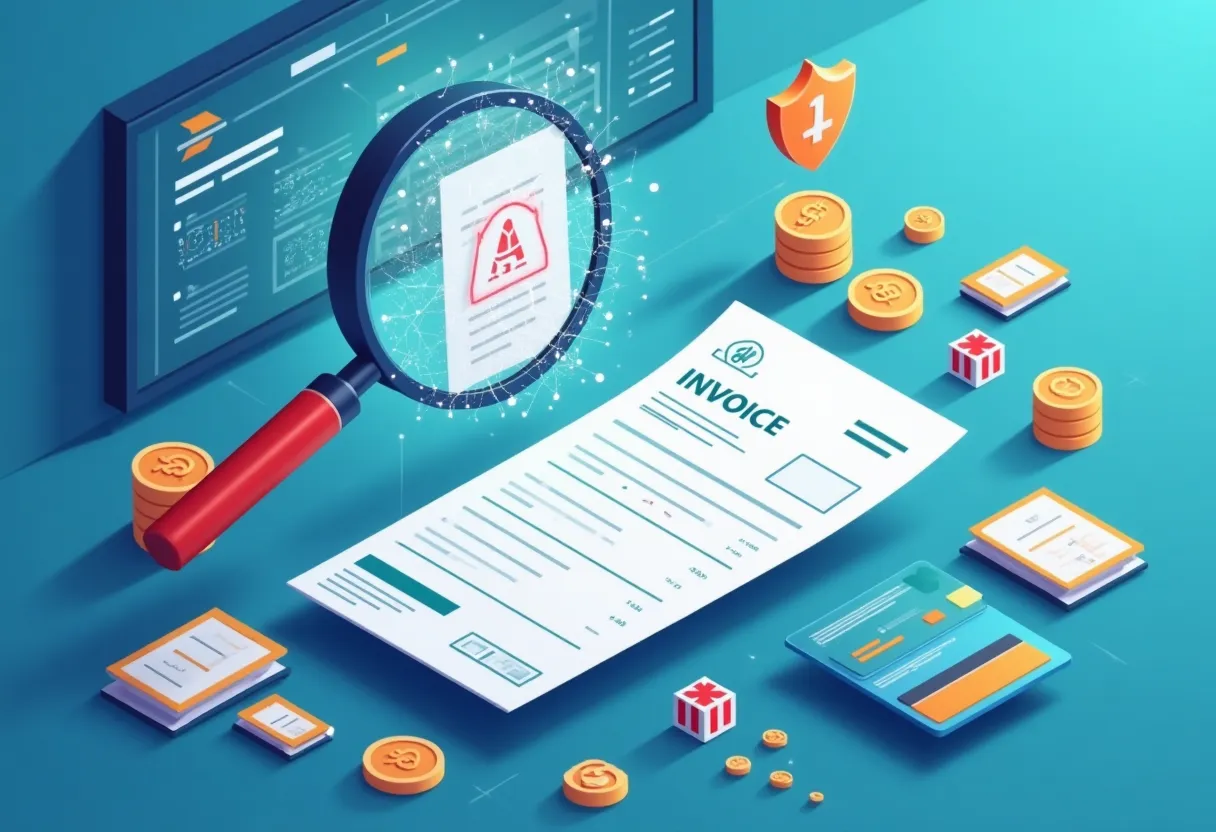

Invoice fraud is a major concern for accounts payable (AP) teams in enterprises, presenting ongoing risks of financial loss, operational inefficiency, and compliance challenges. Detecting and preventing invoice fraud requires a thorough, systematic approach that goes beyond basic field validation or OCR-driven checks. As fraudsters employ increasingly sophisticated methods, including digital alterations and AI-generated fake documents, organizations must adopt a layered control framework that integrates document forensics, metadata analysis, and duplicate detection at scale. This article provides a detailed invoice fraud prevention checklist designed for finance leaders and AP managers to fortify their processes and minimize financial leakage before payment.
Understanding the Magnitude of Invoice Fraud Risk
Invoice fraud can result in millions or more in overpayments, misallocated funds, and damaged vendor relationships. Unlike simple coding errors or duplicate entries, fraudulent invoices are deliberately crafted to deceive payers by altering legitimate documents or fabricating entirely false ones. Traditional AP controls often fail to catch these because they rely heavily on data extraction and validation against purchase orders, but do not verify the authenticity of the invoice document itself. As a result, altered line items, manipulated totals, or fake vendor details may slip through manual and rule-based checks undetected.
The complexity of invoice fraud has grown with the rise of digital editing tools and AI document generation. Attackers use digital tampering, including Photoshop edits and metadata changes, to create invoices that superficially appear genuine. Without 100% document integrity screening, AP teams expose their organizations to inadvertent payment of fraudulent invoices. Robust invoice fraud prevention today demands an operational mindset shift - moving from assumption-based review to evidence-backed authenticity verification.
Key Components of an Effective Invoice Fraud Prevention Checklist
Implementing a comprehensive invoice fraud prevention checklist involves multiple control layers and process enhancements, each designed to detect specific risks and patterns at invoice intake and verification stages.
1. Strengthen Invoice Intake and Vendor Validation
The prevention process begins at invoice submission. Ensuring accurate vendor validation helps reduce fraud entries related to shell companies or impersonated suppliers. Key steps include:
- Verifying vendor identities against trusted databases and contracts before invoice approval.
- Restricting invoice submissions to verified vendor channels and enforcing electronic submission protocols to reduce paper-based tampering risk.
- Using automated document ingestion methods that capture full file metadata (timestamps, GPS, device source) for anomaly detection.
2. Perform Multimodal Document Forensics
Traditional AP controls generally validate only extracted data fields rather than the invoice document's authenticity. Integration of multimodal AI-powered document forensic analysis becomes critical. This includes:
- Visual analysis to detect Photoshop or digital edits and physical tampering signs such as correction fluid or handwritten modifications.
- Cross-checking embedded metadata for inconsistencies or anomalies, including unnatural timestamps and suspicious device fingerprints.
- Mathematical verification that line items, taxes, discounts, and totals align correctly without hidden discrepancies.
Implementing automated tools capable of 100% document coverage ensures no invoice bypasses these vital integrity checks.
3. Detect Duplicate and Altered Invoice Submissions
Duplicate payments represent a common—and costly—form of invoice fraud often arising from slight invoice modifications or resubmissions over time. Effective controls must:
- Employ duplication intelligence to flag identical or nearly identical invoices across vendors, dates, and claim contexts.
- Leverage historical invoice datasets and cross-referencing logic to identify repeat offenders and persistent fraud patterns.
- Automate alerts to AP teams and procurement for fast investigation and resolution before payment proceeds.
4. Integrate Fraud Detection Layer with Existing AP Systems
Adding bespoke fraud detection does not imply replacing ERP or AP automation solutions but supplementing them with an added scrutiny layer. Key integration considerations include:
- Deploying an API-first platform to embed fraud detection seamlessly within existing invoice processing workflows without disrupting throughput or user experiences.
- Ensuring sub-20-second processing times per document to maintain high-volume efficiency and real-time decisioning.
- Providing actionable fraud confidence scores and evidence-backed alerts to empower finance and internal audit teams.
How Do You Detect an AI-Generated Invoice Before Payment?
AI-generated invoice detection requires specialized analysis beyond standard format validation, as such documents can mimic layouts and text almost indistinguishably from genuine invoices. Detection techniques include:
- Evaluating visual artifacts and pixel-level inconsistencies indicative of synthetic content.
- Analyzing embedded metadata for irregularities that would not typically occur in human-created documents.
- Cross-validating invoice content against known vendor behaviors and historical submission patterns to spot anomalies.
Docklands AI utilizes a combination of these multimodal forensic and anomaly detection methods to identify AI-generated invoices with confidence levels exceeding 90%, effectively stopping these sophisticated fraud attempts before payment clearance.
Embedding Best Practices into Your AP Controls
A robust invoice fraud prevention program is not an ad-hoc set of checks but a continuously refined process scaled across the entire AP operation. Best practices include:
- Regularly updating fraud detection rules and models based on emerging threat intelligence and internal audit findings.
- Training AP and finance staff to understand the types of invoice fraud and the value of evidence-backed alerts.
- Implementing continuous monitoring and fast triage workflows for flagged invoices to minimize false positives and payment delays.
- Leveraging advanced platforms like Docklands AI as the document integrity checkpoint to ensure every invoice meets strict authenticity criteria.
Conclusion: A Strategic Investment in Invoice Fraud Prevention
Finance leaders tasked with protecting enterprise funds must adopt a proactive, technology-enabled approach to invoice fraud prevention. This checklist emphasizes critical controls embracing vendor validation, multimodal document forensics, duplicate detection, and seamless integration with your existing AP ecosystem.
Docklands AI provides a proven fraud detection layer designed to process every invoice with rapid, evidence-based alerts and confidence scoring, poised to transform invoice verification and reduce payment leakage.
To strengthen your accounts payable defenses, consider a practical solution that brings 100% invoice coverage and under 20-second processing times to your workflows. You can start protecting your organization today by beginning a 30-day free trial of Docklands AI at https://app.docklands.ai/signup.
For deeper insight into how invoice fraud plays out and methods to spot and stop it effectively, explore our detailed guide on Invoice Fraud: How It Works, How to Spot It, and How to Stop Paying It.
Empowering your AP operation with these controls turns invoice fraud from a hidden risk into a managed and minimized cost factor, safeguarding enterprise value and operational trust.
Request a Demo Today!
Book your demo below.