Identity Fraud Detection Using Machine Learning, Explained
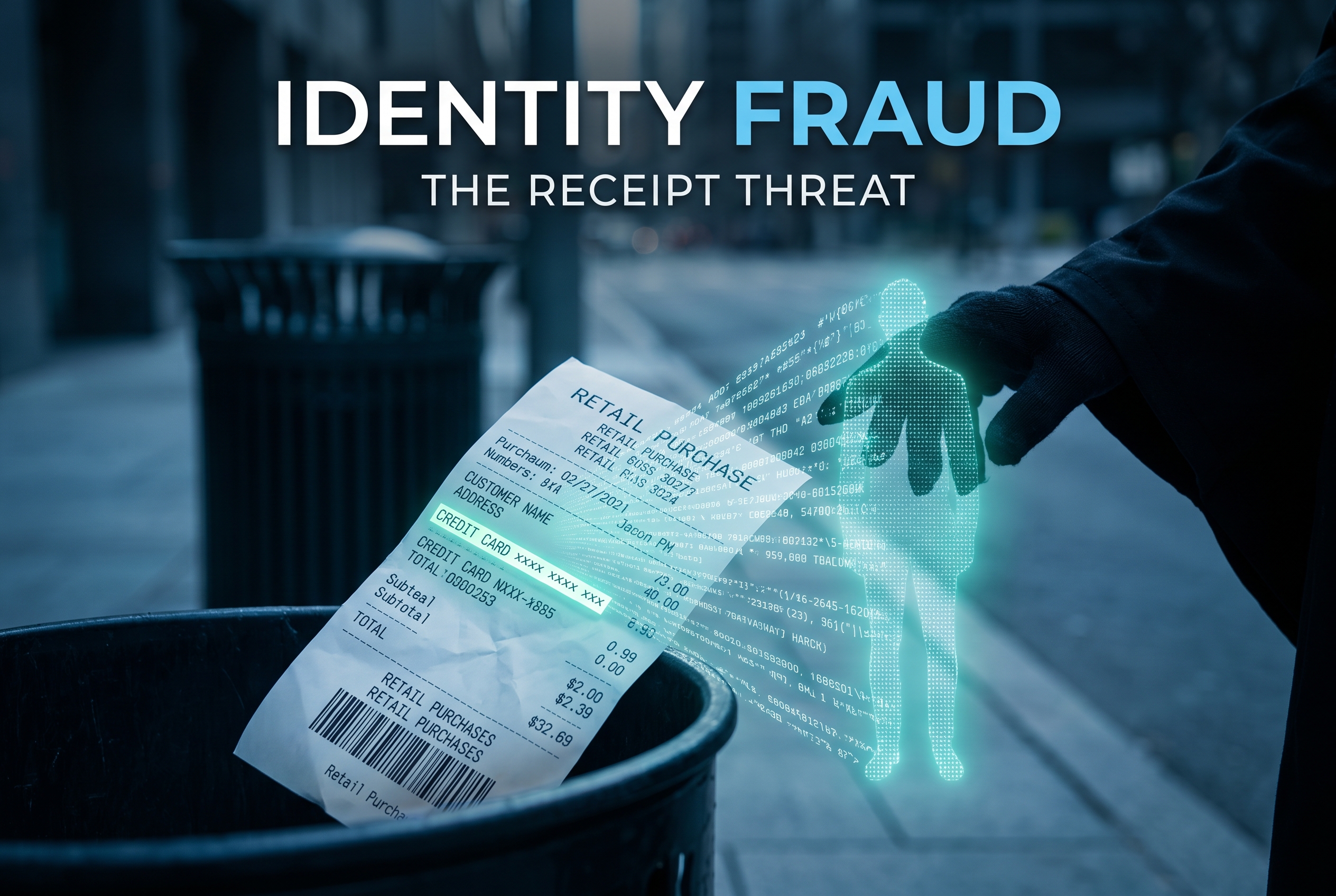

Identity fraud costs businesses and consumers billions of dollars every year, and fraud tactics keep shifting faster than most security teams can keep up with. Stolen credentials, synthetic identities, and account takeovers no longer look like the crude attempts of a decade ago. They look like normal customers, right up until the losses show up on a balance sheet.
This is why so many banks, fintechs, insurers, and marketplaces have moved away from static rules and toward identity fraud detection machine learning systems. Instead of checking a transaction against a fixed list of conditions, these models learn what normal behavior looks like for a given user, account, or channel, then flag the activity and patterns that break from it. Below is a plain-language look at how the underlying algorithms actually work, what data and features they rely on, where the approach tends to fall short, and what a realistic fraud prevention stack looks like in 2026.
What Counts as Identity Fraud
Identity fraud covers any scheme where a bad actor uses stolen, fabricated, or manipulated personal information to gain access to money, credit, benefits, or services. A few categories show up again and again in fraud analysts' case queues:
- Account takeover is the most common entry point. A fraudster gets hold of leaked credentials, runs a phishing scheme, or talks their way past a call center agent, then quietly takes over an account that already has a trusted history behind it.
- New account fraud works the other way around. Instead of hijacking something that exists, the fraudster uses someone else's stolen personal information to open a brand-new account or credit line from scratch.
- Synthetic identity fraud is trickier to spot because there's no real victim to complain. A fraudster blends a real detail, like a valid Social Security number, with fabricated ones, like a made-up name and birthdate, to build a person who has never actually existed.
- First-party fraud flips the usual script. Here, the account holder is the one misrepresenting themselves, often to dodge a debt or squeeze extra credit out of a lender they never intend to pay back.
- Payment fraud is usually the last step, not the first. Once identity data has been compromised through any of the paths above, it gets used to push through unauthorized transactions across banking, retail, or payments platforms.
Each category leaves a slightly different data trail across accounts, devices, and transaction history, which is part of why a single rule engine struggles to catch all of them at scale.
Why Rule-Based Systems Stopped Being Enough
Traditional fraud prevention leaned on rule-based logic. Block a transaction over a certain amount. Flag a login from a new location. Reject an application with a mismatched address. Rules are easy to explain and simple to implement, but fraudsters study the logic behind them and route around it within weeks.
Rule-based systems also generate a flood of false positives. A legitimate customer traveling abroad or switching devices can trip the same alerts as an actual criminal, which forces analysts to spend hours clearing accounts that were never at risk. As transaction volume and applications grow, this manual review process becomes a bottleneck that no amount of hiring or added resources can fully solve.
Machine learning models and artificial intelligence were introduced to close that gap. Rather than relying on a handful of hardcoded thresholds, they can weigh dozens or hundreds of factors and features at once, then adjust their understanding of risk as new data and results come in.
How Machine Learning Models Detect Identity Fraud
At a high level, an identity fraud detection model takes in a set of extracted features about a user, device, or transaction, and outputs a probability or a risk score that reflects the likelihood that activity is fraudulent. The methods used to reach that score vary by approach and by the type of fraud pattern the system is trying to catch.
Supervised Learning and Classification
Supervised learning trains algorithms on historical datasets that have already been labeled as fraudulent or legitimate. Techniques such as logistic regression, gradient-boosted trees, and random forests learn the combinations of factors, like device fingerprint, transaction frequency, or location mismatch, that tend to appear in confirmed fraud cases. Once trained, the classification model scores new activity against those learned patterns to predict the likelihood of fraud.
The strength of supervised learning is accuracy on fraud types the model has already seen in past records. The weakness is that it depends on having enough labeled examples, and fraud rings intentionally design new tactics and strategies that fall outside those existing categories, which limits prediction accuracy on unfamiliar cases.
Unsupervised Learning and Anomaly Detection
Because labeled fraud data is often limited, many organizations pair supervised models with unsupervised learning. Clustering algorithms and anomaly detection methods look for behavior and deviations that fall outside an established baseline without needing a prior label. A login pattern, spending pattern, or application pattern that sits far outside the normal cluster for a given user segment gets flagged for investigation, even if nothing quite like it has appeared in previous datasets.
This approach is particularly useful for catching new fraud tactics and emerging threats early, since it does not depend on matching a known template. Anomaly detection is also one of the more widely used methods across cybersecurity more broadly, not just identity fraud specifically.
Graph and Network Analysis
Identity fraud rarely happens in isolation. Fraud rings reuse devices, IP addresses, phone numbers, and shipping locations across dozens of seemingly unrelated accounts. Graph-based machine learning maps these entities and their relationships as nodes and connections, which makes it possible to spot clusters of accounts that share suspicious links even when each individual account looks clean on its own. This kind of network analysis has become one of the more effective techniques for uncovering synthetic identity clusters, money mule networks, and coordinated account takeover attempts, and it is increasingly paired with anti-money laundering (AML) systems that already rely on entity and relationship mapping.
Neural Networks and Deep Learning
For more complex data, such as images of identity documents, selfies used in biometric authentication, or long sequences of user activity, deep learning models come into play. Convolutional neural networks can assess whether an uploaded ID photo has been tampered with, while sequence-based models can learn typical behavioral patterns over time and flag sudden departures from them. These models tend to require larger datasets and more computing power, and their outputs are harder to explain to regulators, but they can catch subtler forms of manipulation that simpler algorithms miss.
The Data and Features Behind the Model
None of these techniques work without the right data and feature extraction process. A typical identity fraud detection system draws on:
- Transaction data, including amount, frequency, and payment method
- Device and browser fingerprints
- IP address, geolocation, and travel velocity between logins
- Behavioral biometrics, such as typing cadence or mouse movement
- Account activity history, including prior claims, disputes, or chargebacks
- Document and image data submitted during onboarding, identity verification, or a claim
That last category matters more than most fraud detection articles give it credit for. A transaction-pattern model can assign a risky score to an account, but it cannot always tell you whether the driver's license, pay stub, or utility bill a user submitted was doctored. Catching identity fraud at the point of onboarding or claims intake increasingly depends on document-level analysis working alongside behavioral models, not instead of them.
Real-Time Monitoring, Risk Scoring, and Automation
Most production fraud detection systems do not issue a single yes-or-no verdict. They generate a risk score that determines what happens next: approve automatically, request additional identity verification, route to a human analyst, or decline outright. This tiered approach keeps friction low for the vast majority of legitimate customers while concentrating investigation time and expertise on the accounts and applications that actually warrant it.
Real-time monitoring also means the model has to reach a decision in milliseconds, which puts practical limits on how complex the underlying architecture can be at the point of a transaction. Many organizations run a lightweight model for instant decisions and a heavier model in the background for deeper case review and automation of routine screening tasks.
Common Challenges Teams Run Into
Machine learning has clearly improved fraud detection accuracy, but the technology is not a plug-and-play fix. A few recurring gaps and challenges come up across nearly every implementation:
- Class imbalance: Confirmed fraud cases are a tiny fraction of total transactions, which makes it hard for models to learn from enough positive examples without overfitting or generating a flood of false positives.
- Alert fatigue: Even a well-tuned model produces alerts that turn out to be legitimate activity. Left unmanaged, this wears down fraud analysts, slows response times, and erodes trust in the system on the cases that actually matter.
- Explainability: Regulators and internal risk committees often need to understand why a model declined an application or flagged an account. Deep learning models can be accurate and still difficult to justify in plain language, which is one reason simpler, more interpretable algorithms remain popular across regulated sectors like banking and insurance.
- Data privacy: Behavioral and biometric data used to train these models is sensitive, and collecting or storing it comes with its own compliance obligations under regulations like GDPR and various US state privacy statutes.
- Adversarial fraud: Fraud rings actively test detection systems, probing for the thresholds that trigger a review and adjusting their tactics accordingly. Models that do not retrain frequently on updated datasets can fall behind within months.
- Synthetic and AI-generated identities: Generative tools have made it easier to produce convincing fake documents and profile images, which puts more pressure on document forensics to catch what behavioral scoring alone will miss. For a closer look at how this plays out with generated receipts and invoices, see how to detect AI-generated receipts and synthetic invoices.
Where Document Evidence Fits Into the Picture
A lot of identity fraud detection content stops at transaction and behavioral data, but a meaningful share of identity fraud still runs through physical or scanned evidence: identification documents, proof of address, pay stubs, insurance documentation, and receipts. A model that only looks at metadata and account activity can miss a manipulated PDF or an inconsistency buried in a document's underlying structure.
Pairing behavioral machine learning with document forensics closes that gap. This is the same logic laid out in fraud detection with AI works best when evidence leads and in fraud detection using AI should start with originals, both of which make the case that a risk score alone is not proof. For organizations weighing model-based scoring against document-level checks, insurance claim fraud detection models vs. document forensics breaks down why most mature fraud prevention programs need both approaches, not one or the other. And for a deeper look at what document-level checks can actually surface, metadata forensics for receipts walks through timestamps, GPS data, and edit history as concrete evidence.
Building a Realistic Fraud Detection Stack
Organizations that get the most value out of identity fraud detection machine learning tend to combine several layers and methods rather than betting on a single model or algorithm:
- A supervised classification model trained on confirmed fraud cases for known fraud patterns
- An anomaly detection layer to catch behavior that does not match any known category
- Graph and network analysis to surface coordinated rings and shared identity elements
- Document and image forensics to verify the evidence submitted during identity verification or claims
- A human review process, backed by analyst expertise, for the cases that sit closest to the decision threshold
None of these layers is a silver bullet on its own. The accuracy gains come from combining behavioral scoring, pattern recognition, and network analysis with the kind of document-level scrutiny that catches what a pattern-matching model was never designed to see. As fraud tactics, tools, and technologies continue to advance, this layered approach is likely to remain the standard across banking, insurance, and payments alike.
Identity fraud is not going away, and the tools used to commit it keep getting more convincing. A fraud detection program that blends machine learning models with genuine document evidence stands a much better chance of catching what matters before it turns into a financial loss. If your team wants to see how document-level fraud detection fits alongside your existing risk models and systems, you can book a demo with Docklands to walk through it.
Request a Demo Today!
Book your demo below.