AI Document Verification: How It Works and Why It Matters
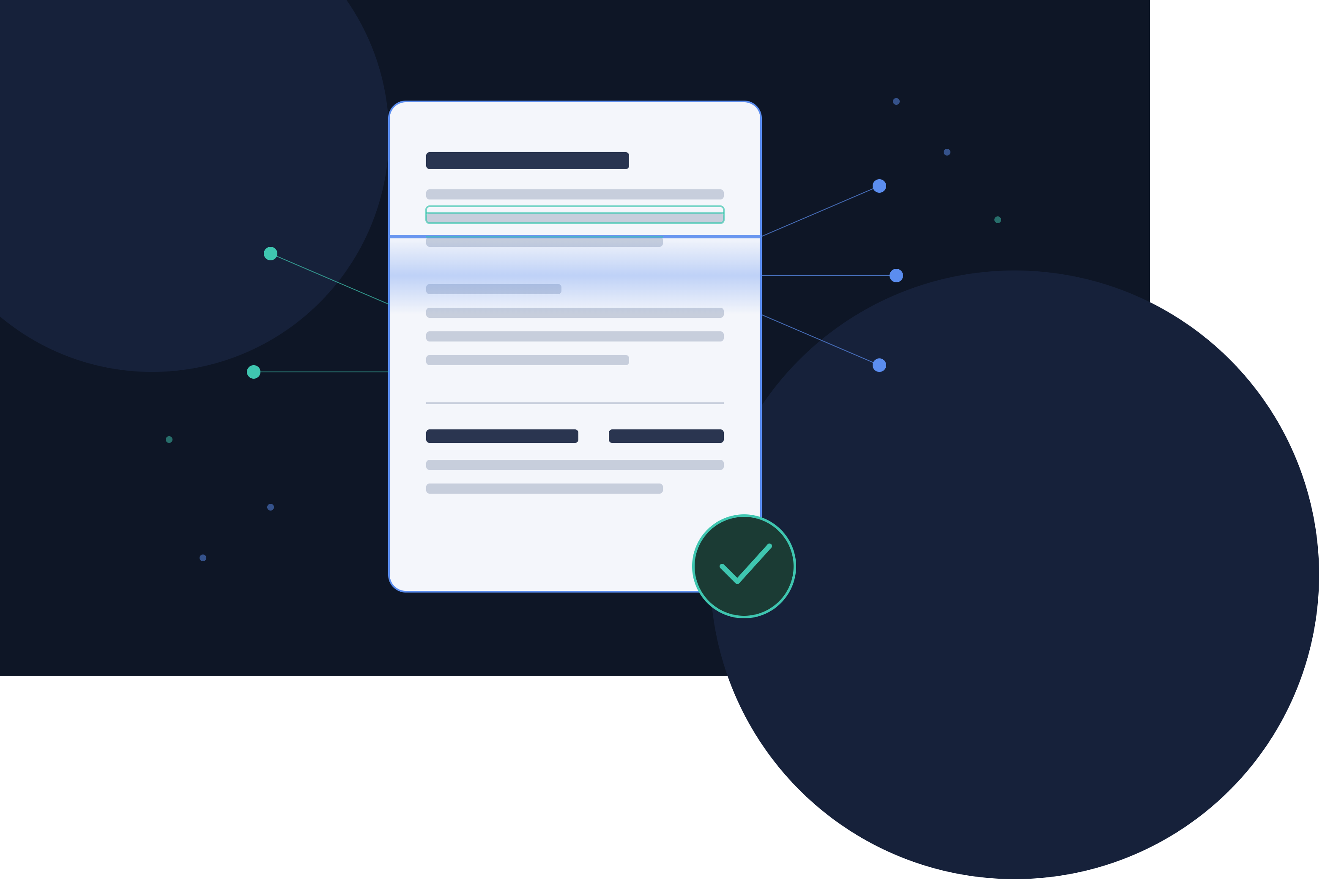

A person reviewing a document can check a handful of things at a glance: does the logo look right, does the math add up, does the name match. A well-trained reviewer catches a fair amount this way. What that reviewer cannot do is check the file's metadata, compare pixel-level texture across thousands of prior submissions, or cross-reference a claimed detail against an external record, all within the few seconds it takes to move to the next document in the queue.
That gap is what AI document verification was built to close. This guide covers what the technology actually does, how it works under the hood, and why it has become a necessary layer for businesses that process documents at volume.
What Is AI Document Verification
AI document verification is the use of machine learning, computer vision, and pattern recognition to confirm whether a document is authentic, unaltered, and consistent with what it claims to be. Rather than relying on a person to inspect a document by eye, the system analyzes the file itself, its visual structure, its data, and often its underlying metadata, to produce a decision or a risk score.
The technology addresses two related questions. The first is authenticity: was this document genuinely issued by the source it claims to come from. The second is integrity: has anything about it been changed since it was created. A document can fail on either question independently, which is why a thorough verification process checks both rather than treating a clean visual appearance as proof of either one.
How AI Document Verification Works
The process generally moves through several stages, each adding a different type of analysis:
- Image capture and preprocessing: The document is scanned or uploaded, then prepared for analysis through steps like deskewing, resolution normalization, and noise reduction, which allow the rest of the pipeline to work consistently across documents of varying quality.
- Data extraction: Optical character recognition pulls text, numbers, and structured fields from the document, converting an image into data the system can actually analyze and compare.
- Pattern and pixel-level analysis: Computer vision models examine the document's visual structure, comparing fonts, spacing, alignment, and texture against patterns learned from large volumes of genuine and fraudulent documents. This step catches manipulation that would be difficult for a human eye to spot, such as a font that is a fraction of a point off, or a texture inconsistency around an edited number.
- Metadata forensics: For digital files, the system reviews creation dates, edit history, and the software signature embedded in the file, checking whether that history is consistent with the document's claimed origin.
- Content and logic checks: Extracted data gets checked for internal consistency, such as whether a total matches the sum of its line items, whether dates fall in a sensible order, and whether figures reported in different sections of the document agree with each other.
- Cross-referencing: Where possible, the system checks extracted details against an external source, such as a vendor database, a government registry, or a record of prior submissions, to confirm the underlying information actually exists and matches.
- Scoring and decision: The results from each stage feed into a confidence score or risk profile. Depending on the outcome, the document is approved automatically, rejected automatically, or escalated to a human reviewer for a closer look. That escalation step matters, since it means the system is not making a final, unreviewable call on the highest-risk cases.
The Technology Behind AI Document Verification
A few core technologies work together to make this process possible.
- Computer vision analyzes the visual content of a document the way a person would look at it, but at a scale and consistency no person can match. It handles the pattern and pixel-level analysis described above.
- Machine learning models are trained on large sets of both genuine and fraudulent documents, learning to recognize the subtle signals that separate one from the other. These models improve as they process more documents, adapting to new tactics as fraud techniques evolve.
- Optical character recognition converts document images into usable text and data, forming the foundation for every downstream content and logic check.
- Natural language processing helps analyze written content on a document for tone, structure, and phrasing consistency, which becomes more relevant as AI-generated documents introduce fabricated text that looks plausible on the surface but does not hold up under closer analysis.
Why AI Document Verification Matters Now
A few converging trends have made this technology less of an option and more of a necessity for businesses handling documents at any real volume.
- Fraud has scaled with technology: Generative tools can now produce a document with correct formatting and believable details without any real original behind it. Traditional forgery detection, built around spotting a manually edited document, was not designed to catch content fabricated from nothing. AI-based detection, trained specifically on these newer patterns, closes that gap.
- Manual review does not scale: A business processing hundreds or thousands of documents a day cannot give each one the kind of close, multi-layer inspection that catches sophisticated tampering. Automation handles the volume; the question is whether that automation actually checks for fraud or simply routes documents faster.
- Accuracy and consistency improve with automation: A tired reviewer at the end of a long shift checks documents differently than the same reviewer first thing in the morning. A well-built system applies the same level of analysis to every document, every time.
- Compliance expectations have risen: Regulated industries increasingly need to demonstrate that document and identity verification meets a defined standard, and an automated process with a documented decision trail supports that requirement more reliably than an informal manual process.
What AI Catches That Manual Review Often Misses
The value of AI document verification becomes clearest in the specific categories of fraud that manual review consistently struggles with.
- Pixel-level tampering: Subtle texture differences around an edited number or a copy-pasted line item, invisible at normal viewing size but detectable through image analysis.
- Metadata inconsistencies: A file's edit history or software signature that contradicts its claimed origin, something a visual review of the document's content alone cannot reveal.
- Mathematical mismatches: A total that does not reconcile with the underlying line items, caught automatically rather than requiring a reviewer to manually rebuild the calculation.
- Pattern anomalies across large data sets: A document that shares unusual similarities with other known fraudulent submissions, a connection a single reviewer working through one document at a time would have no way to notice.
- AI-generated content: Text, formatting, or structural patterns consistent with generative tools rather than a genuine source system, an emerging fraud category that traditional checks were never built to catch.
For a closer look at how this plays out specifically with invoices, the Docklands post on deep-fake invoice red flags breaks down what AP teams should watch for as generated documents become harder to distinguish from genuine ones at a glance.
Where AI Document Verification Still Needs Human Judgment
AI document verification is a powerful layer, not a complete replacement for human oversight. A few limitations are worth keeping in mind.
- Edge cases need escalation: A document that scores in an ambiguous range benefits from a trained person taking a closer look, which is why a well-designed system routes uncertain cases to human review rather than forcing an automatic decision either way.
- Training data shapes accuracy: A model trained primarily on one type of document or one region's formatting standards may perform less reliably on unfamiliar formats, which is why ongoing training and evaluation matter as much as the initial build.
- Context still requires people: A system can flag that a document looks unusual. Deciding what that means for a specific business relationship, or whether a legitimate explanation accounts for the anomaly, often still benefits from a person's judgment.
The strongest approach treats AI document verification as a layer that handles scale and consistency, paired with human review for the cases that genuinely need it. The Docklands post on why automated accounts payable still needs fraud gates covers this balance in more detail for finance teams specifically.
Where AI Document Verification Gets Used
The technology applies broadly across any process where a document supports a decision.
- Banking and financial services: Verifying identity documents and financial statements during account opening and lending decisions.
- Insurance: Checking claims documentation, repair estimates, and receipts for signs of fabrication or inflation.
- Accounts payable: Catching altered or fabricated invoices before they clear a payment run.
- Employee expense management: Verifying receipts submitted for reimbursement.
- Identity verification and onboarding: Confirming that a government-issued ID is authentic and matches the person presenting it.
The Docklands posts on document fraud schemes and detection methods and fake documents go deeper into how these fraud types show up across different document categories.
How Docklands Applies AI to Document Verification
Docklands AI focuses specifically on invoices and receipts, the document types that carry the most direct financial exposure for accounts payable, employee expense, and insurance claims teams. The platform analyzes documents at the pixel level, combining several layers of detection rather than relying on a single check.
That includes:
- Digital edit detection to catch texture anomalies, misaligned tables, and copy-paste artifacts left behind by editing software.
- Metadata forensics comparing a document's edit history and software signature against its claimed origin.
- AI-generated content detection to catch invoices and receipts produced by generative tools rather than a genuine source system.
- Mathematical checks that automatically verify line items, tax, and totals against each other.
- Physical tampering detection for correction fluid, handwritten edits, and cut-and-paste alterations.
This approach applies directly to insurance claims, accounts payable, and employee expenses, giving teams a detection layer built for the specific ways invoices and receipts get manipulated. For a broader look at how these signals work together, the Docklands post on fraud detection starting with originals explains why requesting the source file, rather than a screenshot, changes what this kind of analysis can find.
FAQ
How accurate is AI document verification compared with manual review?
Well-trained systems generally achieve higher consistency than manual review, since they apply the same level of analysis to every document rather than varying with reviewer fatigue or experience. Accuracy depends heavily on training data quality and the specific document types involved.
Can AI document verification replace human reviewers entirely?
Not reliably. Most effective systems route ambiguous or high-risk cases to human review rather than making every decision automatically, combining the scale of automation with the judgment a trained person brings to edge cases.
What is the difference between OCR and AI document verification?
OCR extracts text and data from a document image. AI document verification is a broader process that uses OCR as one component alongside computer vision, pattern recognition, and metadata analysis to assess whether a document is authentic and unaltered.
Does AI document verification work on AI-generated fake documents?
Yes, when the system is trained specifically to recognize the patterns generative tools tend to produce, such as subtle formatting inconsistencies or content that does not hold up under cross-referencing, even when nothing looks visually wrong at a glance.
How fast is AI document verification compared with manual checks?
Automated analysis typically completes in seconds, compared with manual review that can take significantly longer depending on document volume and complexity, particularly when cross-referencing external records is involved.
The Takeaway
AI document verification exists because manual review has a ceiling that document fraud has already moved past. The technology does not remove the need for human judgment, but it applies a level of consistency, speed, and forensic depth that a person working through a queue of documents cannot match on their own.
Businesses that want to see how AI-based document verification fits into an existing invoice and receipt workflow can book a demo with Docklands AI.
Request a Demo Today!
Book your demo below.